Why Choose Raleigh?
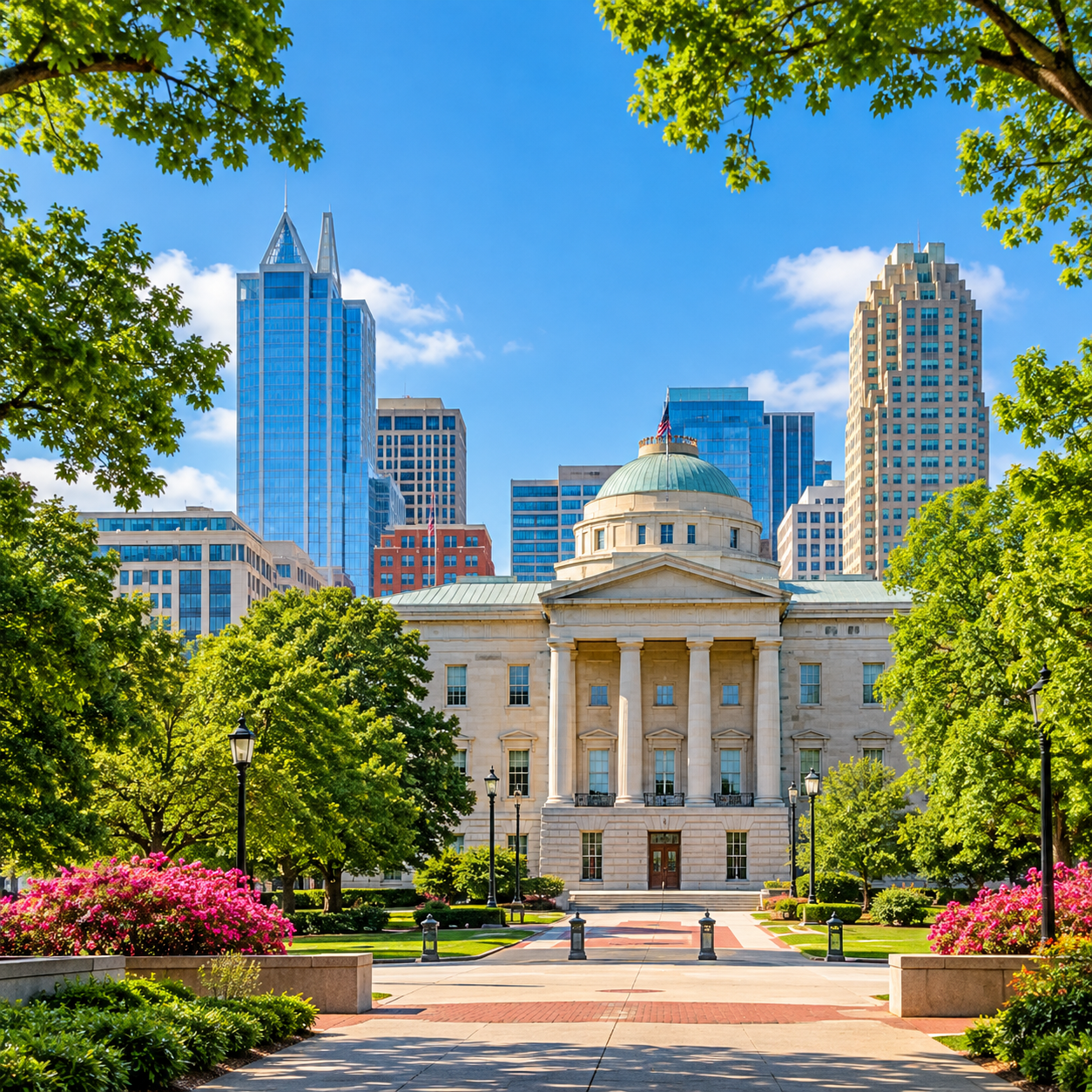
Raleigh combines a strong employment base with a comfortable Southern setting. Additionally, downtown offers museums, restaurants, entertainment, breweries, and historic neighborhoods. Visit Raleigh
Different areas provide distinct lifestyles. Meanwhile, Midtown, North Raleigh, and Brier Creek offer shopping and suburban conveniences. Visit Raleigh
Cost of Living
Housing represents an important part of a Raleigh relocation budget. The 2020–2024 median owner-occupied home value was $415,800.
Meanwhile, median gross rent was $1,572. Therefore, movers should compare housing, transportation, utilities, and insurance carefully. Census.gov
Real Estate and Housing Market
Raleigh offers single-family homes, apartments, condominiums, townhomes, and newer mixed-use developments.
Housing choices vary between downtown, Midtown, North Raleigh, and growing outer neighborhoods. Before buying, compare commute times, HOA costs, and nearby services.
Education
The Wake County Public School System serves Raleigh and surrounding Wake County communities. Families can review district transportation, calendars, school meals, and school-choice resources online. Wake County Public School System
Additionally, North Carolina State University gives Raleigh a major higher education and research presence. Other colleges across the Triangle expand educational options.
Healthcare Facilities
WakeMed Raleigh Campus is a major regional healthcare center on New Bern Avenue. Services include emergency care, surgery, heart care, pediatrics, rehabilitation, and a Level I Trauma Center. WakeMed
Additional hospitals, clinics, and specialty providers operate throughout Raleigh. Therefore, residents have broad options for routine and advanced care.
Recreation and Leisure
Raleigh maintains more than 200 parks with playgrounds, lakes, nature preserves, pools, sports facilities, and community centers. Raleigh NC
The Capital Area Greenway system adds more than 100 miles of trails. As a result, walking and cycling are available across many parts of the city. Raleigh NC
Dining and Shopping
Downtown Raleigh mixes Southern restaurants, global cuisine, breweries, local shops, and entertainment. Visit Raleigh
Meanwhile, Midtown includes North Hills, Crabtree Valley, Village District, and Five Points. These areas provide additional shopping, dining, and entertainment choices. Visit Raleigh
Events and Festivals
Raleigh hosts concerts, festivals, performing arts, sports, museum programs, and seasonal celebrations throughout the year.
Additionally, downtown and surrounding districts maintain active event calendars. Cultural venues and public spaces help support year-round activities. Visit Raleigh
Transportation and Accessibility
GoRaleigh operates an extensive city bus network. As of March 2026, ten routes offered high-frequency service every 15 minutes or better. GoRaleigh
Driving remains common, especially outside central neighborhoods. However, downtown also offers buses, walking routes, bicycles, and micromobility options. GoRaleigh
Raleigh-Durham International Airport provides extensive air service. Its current route network includes nonstop destinations across the United States and international markets. Raleigh-Durham International Airport
Conclusion
Raleigh combines housing variety, education, healthcare, parks, dining, and regional employment access.
Before relocating, compare housing costs, school assignments, commute routes, and neighborhood amenities. Overall, Raleigh suits residents seeking a growing capital city with strong everyday resources.