Why Choose Winston-Salem?
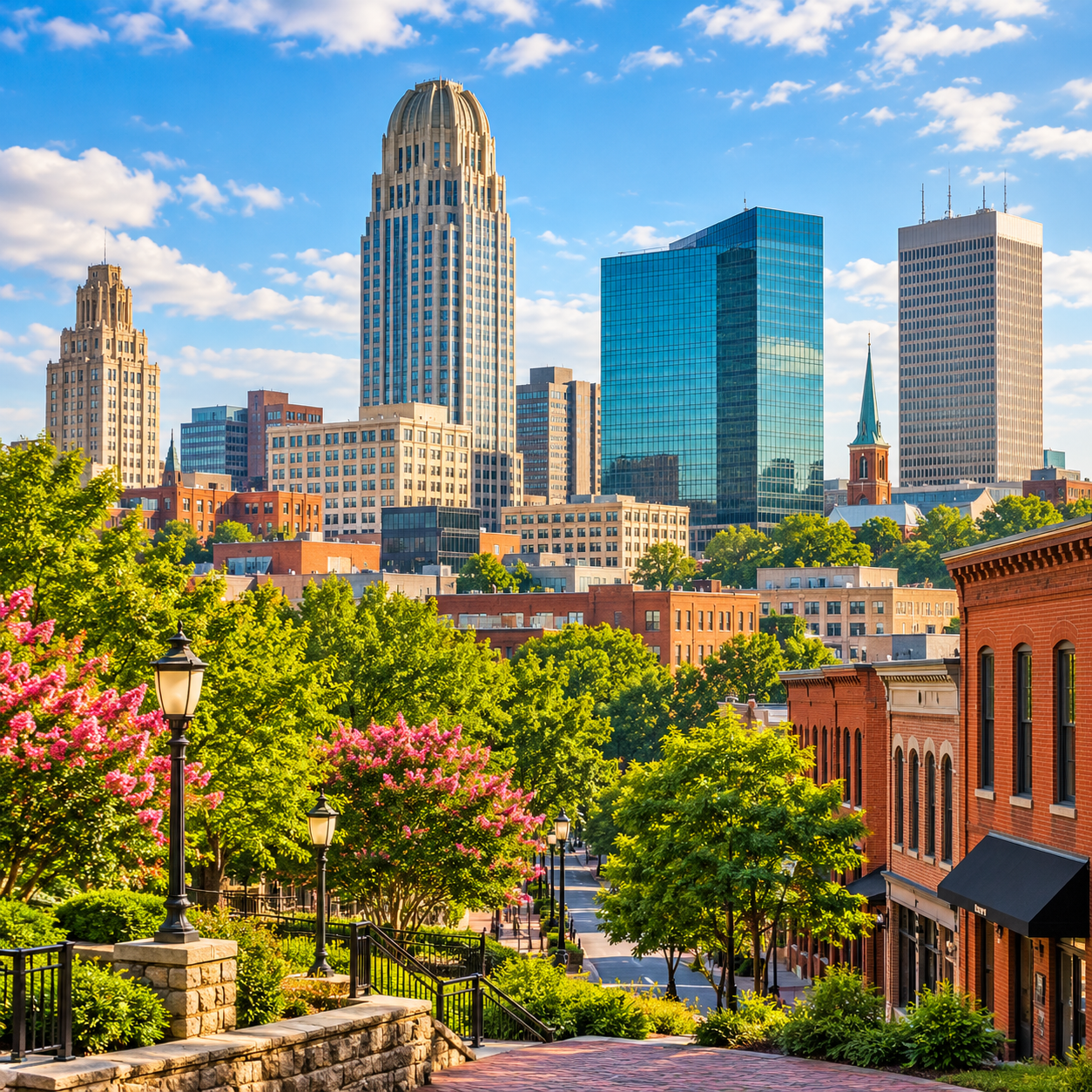
Winston-Salem combines historic character with modern development. Downtown includes the Arts District, Innovation Quarter, restaurants, entertainment, and renovated industrial buildings.
Meanwhile, established neighborhoods provide quieter residential settings. The Blue Ridge Mountains are also about 90 minutes away.
Cost of Living
Housing remains more approachable than in several larger North Carolina metros. The 2020–2024 median owner-occupied home value was $233,800.
Meanwhile, median gross rent was $1,087. Therefore, movers should compare housing, transportation, utilities, and insurance when planning a budget.
Real Estate and Housing Market
Winston-Salem offers single-family homes, apartments, townhomes, condominiums, and historic properties. Housing styles vary significantly between older neighborhoods and newer developments.
Before buying, compare property condition, commute routes, taxes, and nearby services. Additionally, downtown redevelopment continues creating more residential choices.
Education
Winston-Salem/Forsyth County Schools serves families throughout Winston-Salem and surrounding Forsyth County. Magnet and choice programs provide additional educational options.
Families should confirm current school assignments before selecting a home. The district provides an online assignment system for the 2026–2027 school year.
Higher education includes Wake Forest University, Winston-Salem State University, and Salem College.
Healthcare Facilities
Atrium Health Wake Forest Baptist Medical Center is a major healthcare center in Winston-Salem. Its 933-bed tertiary hospital includes adult and pediatric Level I Trauma Centers.
Additionally, the campus includes Brenner Children’s Hospital and a comprehensive cancer center. As a result, residents have access to advanced regional medical care.
Recreation and Leisure
Winston-Salem maintains 79 parks with playgrounds, sports fields, pools, courts, and picnic facilities. Salem Lake also provides a seven-mile trail around a 365-acre lake.
The city has more than 25 miles of greenways. Therefore, residents have many choices for walking, running, and cycling.
Dining and Shopping
Downtown Winston-Salem offers restaurants, breweries, galleries, shops, and entertainment. The downtown area includes more than 120 restaurants, shops, and bars.
Meanwhile, Reynolda Road and other commercial districts provide boutiques, markets, and everyday shopping.
Events and Festivals
Winston-Salem hosts concerts, arts festivals, sporting events, food events, theater, and seasonal celebrations throughout the year.
Additionally, the city’s current event calendar includes hundreds of local activities. Arts and cultural programming remains especially active downtown.
Transportation and Accessibility
Winston-Salem Transit Authority operates local bus and paratransit services. Current bus service runs seven days a week, with operating hours varying by day.
Driving remains common for regional trips. Interstate 40 and other major highways connect Winston-Salem with Greensboro, High Point, and surrounding communities.
Piedmont Triad International Airport sits between Winston-Salem, Greensboro, and High Point. In 2026, the airport listed 14 nonstop routes during its Nonstop Challenge program.
Conclusion
Winston-Salem combines affordable housing, universities, healthcare, parks, dining, arts, and regional transportation.
Before relocating, compare housing costs, school assignments, commute routes, and neighborhood amenities. Overall, Winston-Salem offers a practical balance of city services and Piedmont living.